Learning to fly a radio-controlled airplane is an exciting way to experience aviation, develop new skills, and become part of a welcoming community. Although modern RC airplanes are more beginner-friendly than ever, receiving help from an experienced pilot can make your first flights safer, easier, and much more enjoyable.
For aspiring pilots in Central Florida, Tri-County RC Club provides a dedicated place to learn, practice, and connect with experienced model aviation enthusiasts. Our AMA-sanctioned club operates an FAA-Recognized Identification Area, commonly called a FRIA, at our flying field in Dunnellon, Florida.
Whether you live near Dunnellon, Ocala, Inverness, Crystal River, Citrus Springs, Hernando, Beverly Hills, or another nearby community, here is how to begin your RC flying journey.
1. Visit a Local RC Flying Club
The best first step is not buying an airplane. It is visiting an established RC flying club.
Watching experienced pilots fly gives you an opportunity to see different types of aircraft, ask questions, and understand how an organized flying field operates. You can also learn which airplanes, radios, batteries, chargers, and accessories are appropriate for a beginner.
Visiting a club before purchasing equipment may prevent you from spending money on an airplane that is too fast, too advanced, or difficult to repair.
At Tri-County RC Club, visitors can meet local pilots, see RC aircraft in action, and learn more about becoming a member. Club members can also explain the training process and help you prepare for your first flight.
2. Complete the FAA TRUST
Most recreational RC pilots must complete The Recreational UAS Safety Test, commonly known as TRUST.
TRUST is a free online aeronautical knowledge and safety test for recreational flyers. The test covers basic airspace rules, safe flying practices, emergency procedures, and the responsibilities of recreational pilots. RC airplanes, helicopters, multirotors, and similar model aircraft are included within the FAA’s recreational UAS requirements.
After completing TRUST, you will receive a certificate of completion. Keep a digital or printed copy available whenever you fly. The FAA requires recreational pilots to carry proof that they have passed the test.
TRUST is designed to be educational rather than intimidating. You can complete it online through an FAA-approved test administrator, including the Academy of Model Aeronautics.
3. Register With the FAA When Required
Depending on the weight of your RC airplane, FAA registration may also be required.
Recreational aircraft weighing more than 0.55 pounds, or 250 grams, generally must be registered with the FAA. After registering, the pilot must place the assigned FAA registration number on each covered aircraft. Always review the current FAA requirements before flying because registration and identification rules may change.
The FAA also has Remote ID requirements for aircraft that are registered or required to be registered. One option for recreational pilots is to operate within the boundaries of an FAA-Recognized Identification Area.
Tri-County RC Club’s Dunnellon flying field is a FRIA. This allows qualifying aircraft to be operated at the field without Remote ID equipment when all applicable FRIA and recreational flying requirements are followed.
4. Join the Academy of Model Aeronautics
The Academy of Model Aeronautics, usually called the AMA, is the national organization representing model aviation in the United States.
AMA membership provides access to safety resources, educational materials, organized flying programs, and member benefits. Many established RC clubs require AMA membership because it supports a consistent set of safety practices for everyone using the flying field.
Tri-County RC Club is an AMA-sanctioned club. New members should obtain an active AMA membership and become familiar with the current AMA Safety Code before flying independently at the club field.
5. Choose the Right Beginner RC Airplane
Your first airplane can have a major effect on your learning experience.
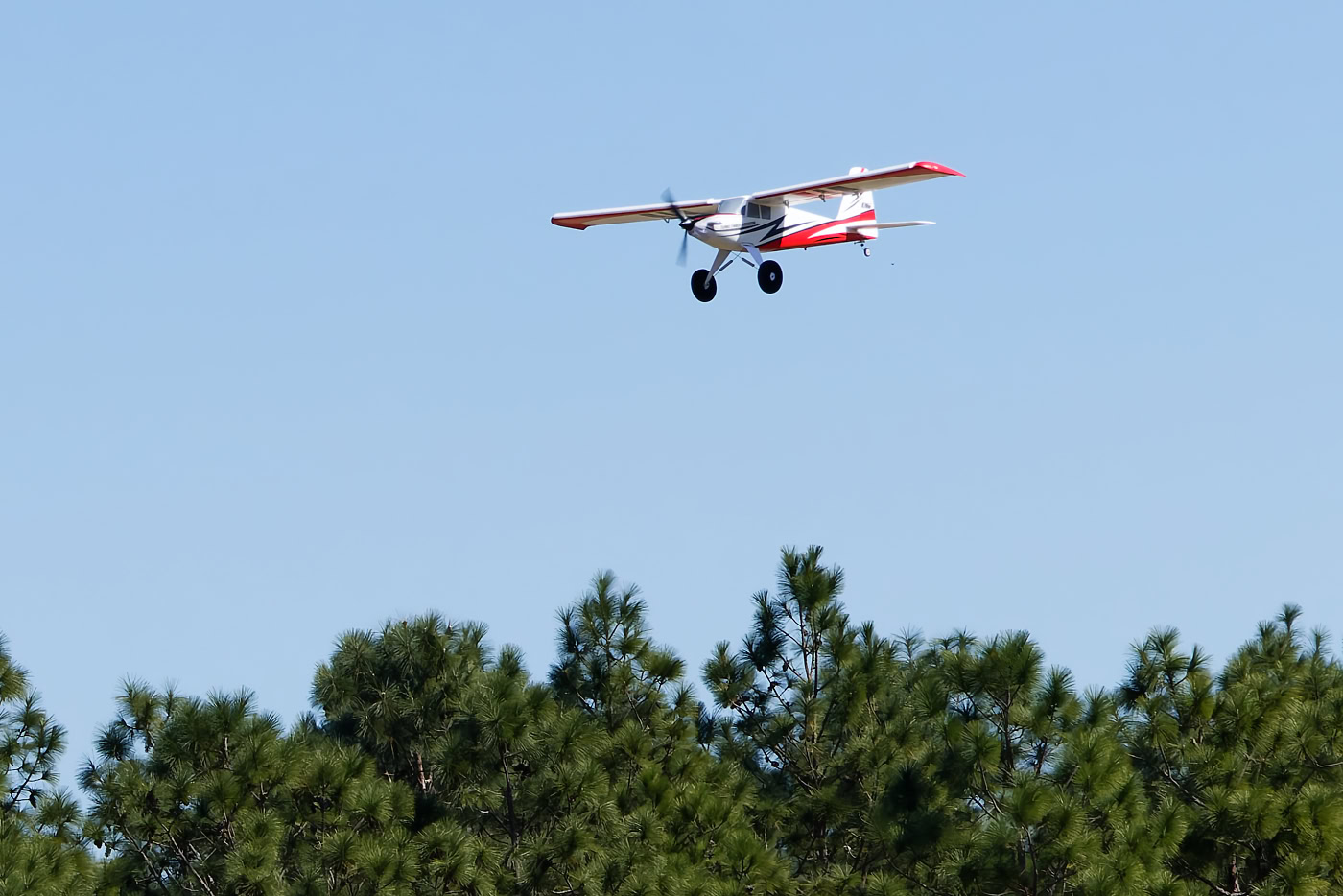
A good beginner airplane should be stable, easy to see, relatively slow, and simple to repair. A high-wing electric trainer is usually a much better first aircraft than a fast warbird, aerobatic airplane, jet, or scale model.
Look for these beginner-friendly characteristics:
- A high-wing design
- Durable foam construction
- Moderate wingspan
- Electric power
- Gentle flight characteristics
- Easily available replacement parts
- Optional electronic stabilization
- A radio system that can support instructor training
Some ready-to-fly packages include the airplane, transmitter, battery, and charger. Others require you to purchase those items separately.
Before buying anything, speak with one of our experienced pilots or instructors. An airplane that works with the instructor’s radio equipment may make it easier to use a trainer-cord or wireless buddy-box system.
6. Learn With an Experienced RC Flight Instructor
Trying to teach yourself often leads to damaged airplanes and frustration. Learning with an experienced RC pilot gives you a safer and more structured path.
During an instructional flight, the student and instructor may use connected or wirelessly linked transmitters. The student controls the airplane while the instructor remains ready to take control when necessary.
This allows you to practice without placing the entire flight at risk.
An instructor can help you learn:
- Preflight inspections
- Battery and radio safety
- Correct control-surface movement
- Proper takeoff procedures
- Straight and level flight
- Gentle turns
- Altitude and speed control
- Flying a consistent traffic pattern
- Preparing for landing
- Safe landing approaches
- Emergency procedures
- Post-flight inspections
The instructor can also identify small mistakes before they become habits.
7. Practice Orientation and Control
One of the biggest challenges for new RC pilots is aircraft orientation.
When an airplane is flying away from you, its right side is generally still your right. When it is flying toward you, the controls can appear reversed from your perspective. Beginners must learn to make control inputs based on the aircraft’s direction rather than their own position.
This skill develops through repetition.
Your early lessons will normally focus on maintaining a safe altitude, making smooth turns, and keeping the airplane within a comfortable flying area. As your control improves, you can begin practicing rectangular traffic patterns, approach planning, takeoffs, and landings.
There is no need to rush. Every pilot progresses at a different pace.
8. Learn How Central Florida Weather Affects Flying
Weather plays an important role in RC aviation.
Central Florida can experience changing winds, strong afternoon heat, thunderstorms, and rapidly developing rain. New pilots generally learn more easily in calm or light-wind conditions.
Morning flights are often preferred by beginners because visibility and wind conditions may be more manageable. However, pilots should always check the current conditions at the flying field rather than relying on a general forecast.
Before flying, pay attention to:
- Wind speed and direction
- Wind gusts
- Thunderstorms
- Nearby lightning
- Visibility
- Sun position
- Temperature
- Temporary flight restrictions
- Field conditions
An experienced instructor can help you decide whether the conditions are appropriate for your aircraft and current skill level.
9. Prepare Your Airplane Before Every Flight
A successful flight begins before the airplane leaves the ground.
Your instructor will teach you how to complete a proper preflight inspection. This usually includes checking the airframe, propeller, landing gear, battery, radio system, control surfaces, and correct center of gravity.
Before takeoff, confirm that:
- The battery is charged and secured
- The propeller is undamaged and properly installed
- The wing is attached securely
- The control surfaces move freely
- Every control moves in the correct direction
- The transmitter has the correct model selected
- The receiver has a reliable radio connection
- The aircraft is properly balanced
- The flying area is clear
- Your flight follows club and field procedures
Never fly an aircraft that has a damaged propeller, loose component, swollen battery, unreliable radio connection, or incorrect control response.
10. Work Toward Your First Solo Flight
Your first solo flight is an important milestone, but it should not be treated as a race.
Before flying independently, you should be able to maintain control of the aircraft, recover from common mistakes, follow the field’s traffic pattern, complete safe takeoffs, and perform consistent landings.
Your instructor will help determine when you are ready.
Some students may solo after several successful training sessions. Others may need additional time to become comfortable with orientation, approaches, or landings. The goal is not to solo as quickly as possible. The goal is to become a safe, confident, and responsible RC pilot.
Once you complete your first solo flight, there is still plenty to learn. You can continue improving your landings, practice in different wind conditions, explore new aircraft, and eventually learn aerobatics or scale flying.
What Equipment Does a Beginner Need?
Your exact equipment will depend on the airplane you select, but most beginners will eventually need:
- A beginner-friendly RC airplane
- A compatible transmitter and receiver
- Flight batteries
- A suitable battery charger
- A LiPo-safe charging and storage solution
- Basic tools
- Spare propellers
- Replacement parts
- AMA membership
- FAA registration when required
- TRUST completion certificate
- Club membership
Ask an experienced pilot to review your equipment before your first flight. Proper setup is just as important as choosing the right airplane.
Can Children Learn to Fly RC Airplanes?
Yes. RC aviation can be an excellent activity for young people who are interested in airplanes, engineering, electronics, or hands-on learning.
Junior pilots should receive close supervision from a parent, guardian, or qualified instructor. Parents and guardians should also review the club’s membership requirements, safety rules, and required agreements before a junior member begins flying.
A stable training airplane and a buddy-box system can help younger pilots learn safely and build confidence gradually.
Why Learn at an RC Club Instead of a Public Park?
A dedicated RC flying field offers several advantages over attempting to fly at an unfamiliar public location.
An established club provides:
- A designated flying area
- Experienced instructors
- Organized safety procedures
- Help with aircraft setup
- Knowledge of local airspace
- A community of fellow pilots
- A place to continue learning
- Support when repairs or adjustments are needed
Public parks may have restrictions on model aircraft, unsuitable terrain, nearby people, obstacles, or airspace concerns. A club field provides a more structured environment created specifically for model aviation.
Start Learning to Fly in Dunnellon, Florida
You do not need previous aviation experience to become an RC pilot. You only need patience, a willingness to learn, and the right guidance.
Tri-County RC Club welcomes people who are interested in model aviation and want to learn more about the hobby. Our Dunnellon flying field serves RC enthusiasts from throughout the surrounding Central Florida area.
Your path to becoming an RC pilot is straightforward:
- Visit the flying field.
- Complete the FAA TRUST.
- Register with the FAA when required.
- Join the AMA.
- Become a Tri-County RC Club member.
- Choose an appropriate trainer airplane.
- Work with an experienced instructor.
- Practice until you are ready to solo.
Come meet our members, watch the aircraft, ask questions, and discover how rewarding RC aviation can be.
Ready to begin? Visit our New Pilot page or contact us to easily arrange your first visit.
Have Questions?
Contact us about visiting the field, learning to fly, upcoming events, or club membership. We look forward to connecting with you.